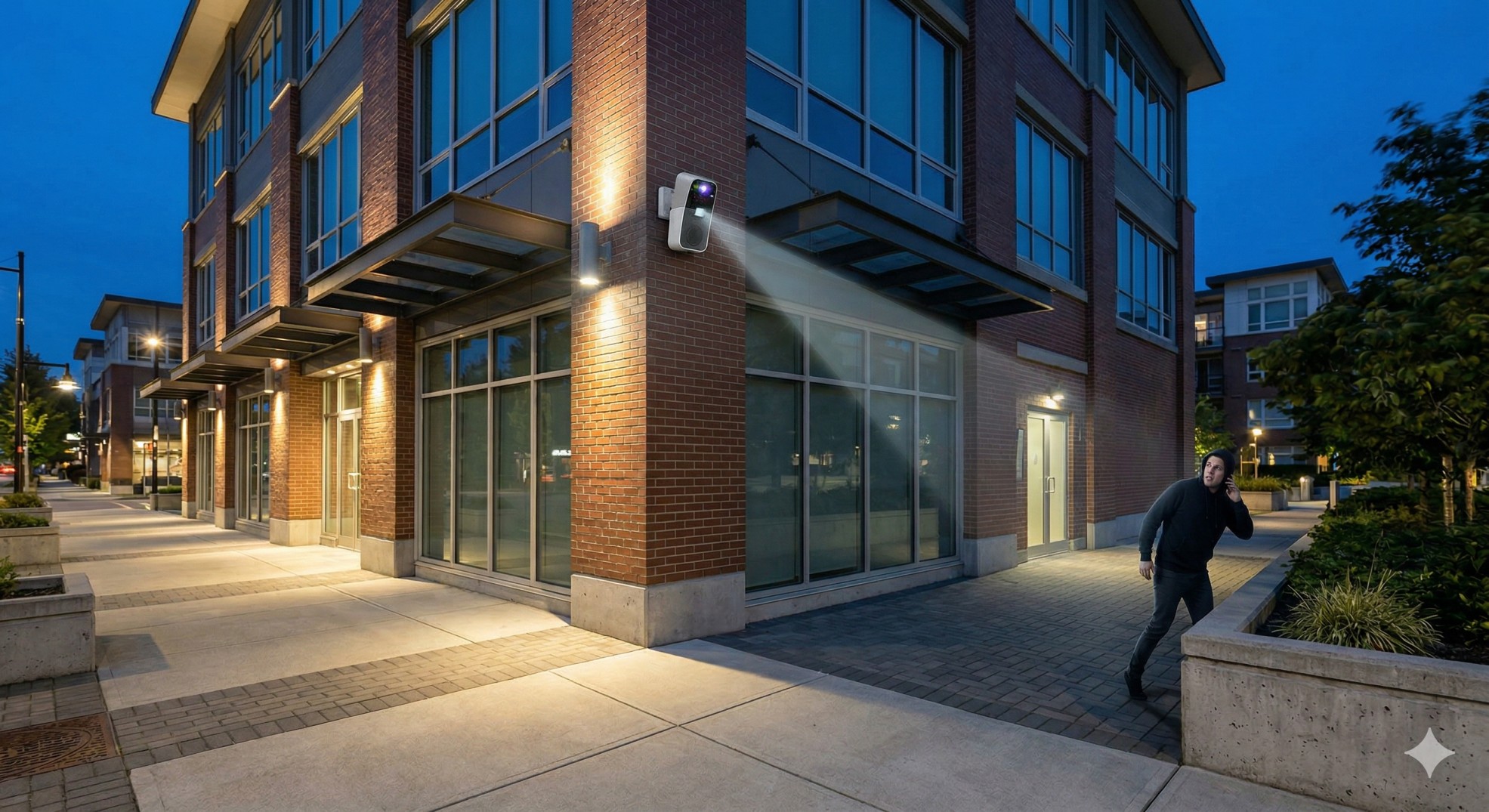
What is SCRAM?
SCRAM is a proactive video monitoring solution designed to address loitering around buildings before they turn into safety incidents, code violations, or insurance claims.
Unlike traditional systems that simply record what already happened, SCRAM uses:
- Smart cameras + analytics/AI to detect people who are loitering in high‑traffic areas
- Automated talk‑down audio to tell them to move along
- Optional alerts to on‑site or local guard services for a targeted, timely response
- Optional escalation to Radius’s ULC‑certified command centers when needed
SCRAM is built for property managers and building owners who need a structured, preventative way to manage “urban disorder” around their assets, without standing outside 24/7 or relying only on guards and cleanup after the fact.
Beyond the Camera:
Why Passive Recording Isn’t Enough to Stop Loitering
Traditional CCTV does one thing well: it records. But for property managers, that creates a few problems:
- It’s reactive, not preventative: You only review footage after graffiti is sprayed, glass is broken, or an encampment has formed.
- Costs are hidden and scattered: Cleanup, repairs, glass replacement, and extra janitorial hours get buried under multiple budget lines (maintenance, janitorial, security), making the true cost of loitering hard to see.
- No early intervention: By the time someone reviews the video, the damage is done, the insurance claim is filed, and tenants have already had a negative experience.
SCRAM flips this model. It uses cameras and analytics to identify risky behavior as it’s starting, for example, when someone lingers in a stairwell long enough to suggest they’re about to use drugs, set up camp, or start tampering with doors or windows.
The system then steps in with automated, real‑time responses rather than just passively watching.
The “Broken Windows” Effect in Property Management
In property management, small signs of neglect rarely stay small for long. A single broken window, a fresh tag on a wall, or a person regularly camped in a stairwell sends a quiet but powerful signal: “No one is really watching this place.” That’s the essence of the “Broken Windows” effect, visible disorder invites more disorder.
For commercial and multi‑family properties, this plays out in very real ways:
- Loitering becomes encampments
What starts as someone lingering by a rear entrance can quickly turn into a regular gathering spot, then a semi‑permanent camp.
- Minor vandalism escalates into costly damage
One piece of graffiti turns into repeated tagging; a cracked pane turns into full glass breakage, with some insurers now refusing to cover glass at all.
- Tenant perception quietly shifts
Residents and employees begin to feel less safe walking in, stepping over drug paraphernalia or groups at the door. Over time, that erodes tenant satisfaction, renewals, and rent potential.
- Risk and liability quietly rise
Garbage and encampments start blocking fire exits and escape routes, putting managers at risk of code violations and serious life‑safety exposure.
SCRAM is designed to interrupt this “Broken Windows” chain early. By detecting lingering behavior in high‑risk zones and responding with automated talk‑down and targeted guard alerts, it helps prevent those first visible signs of disorder from taking root. The goal isn’t just to move people along, it’s to maintain a clear, visible standard of care around the property, so the building consistently communicates: “This space is monitored, maintained, and valued.”
How can Property Managers address an increasingly growing stress point in their business?
Property managers can address rising stress from loitering, encampments, vandalism, and “urban disorder” by:
1. Recognizing it as core work now
These issues are no longer minor nuisances, they directly affect fire/code compliance, insurance exposure, tenant perception, occupancy, and long-term asset value. Exterior risk management is now a core part of professional property management.
2. Creating a dedicated budget line and strategy
Instead of letting costs hide under janitorial, maintenance, and security, managers should create a specific line item (e.g., “Urban Disorder Mitigation”) and reclassify related expenses there. This reveals the true annual impact and supports a more intentional plan.
3. Shifting from reactive to preventative management
Rather than only paying for guards, cleanup, and repairs after incidents, managers can adopt preventative frameworks: early intervention, automated deterrence, and documented risk management. Tools like SCRAM use cameras, analytics, and talk-down audio to intervene before behavior escalates.
4. Building expertise and partnerships
Managers can reduce stress by partnering with security providers who:
- Conduct site audits and recommend camera placement/coverage
- Apply CPTED principles
- Provide training, education, and ongoing support; this turns them into confident, informed stewards rather than isolated problem-solvers.
5. Using reporting and data to prove value and reduce uncertainty
Incident reports and monthly roll-ups (events, guard calls, police calls) replace guesswork with clear data. Managers can show owners what’s happening, what’s being done, and how effective it is in turning an emotional stress point into a measurable, managed risk.
6. Treating it as a competitive competency
Because urban disorder trends are rising and spreading beyond downtown cores, managers who can clearly explain, quantify, and manage these risks will stand out. Proactive exterior risk management becomes a differentiator, not just damage control.
How Property Managers can build a budget for addressing loitering and considerations?
1. Start by Making Loitering Its Own Budget Line Item
- Create a Dedicated Line Item: Move hidden costs like; janitorial, glass repair, and security, out of general maintenance and into a specific category such as "Urban Disorder Mitigation."
- Track the "True Cost": Quantify direct expenses (biohazard cleanup, graffiti, guard hours) alongside indirect hits (tenant turnover, rent concessions, and rising insurance premiums).
2. Audit the Past to Predict the Future
- Historical Review: Analyze the last 12–24 months of invoices to establish a baseline annual cost.
- Asset Valuation: Recognize that frequent incidents don't just cost "repair money"; they degrade long-term property value and can lead to insurance exclusions (e.g., insurers refusing to cover glass).
3. Move from Reactive to Proactive
- The Preventative Framework: Shift budget away from "cleaning up the mess" and toward "preventing the incident."
- Smart Allocation: Split your budget into Reactive Costs (residual cleanup) and Proactive Investments (early intervention and deterrence technology).
4. Model ROI with Data
- Use Tools: Utilize ROI calculators (like Radius’s SCRAM) to visualize how automated intervention can offset expensive manual guard hours and repair cycles.
- Defensible Strategy: Present ownership with a structured model—balancing hardware, monitoring, and targeted response—rather than relying on "gut feelings" about security.
5. Communicate Value to Stakeholders
- Internal Alignment: Frame the budget to owners and finance teams as asset protection and fire/life safety, rather than just "security."
- Refined Parameters: Ensure external perception remains positive by tuning intervention thresholds, distinguishing between a resident/shopper and high-risk behavior like drug use or encampment setup.
New Path to Becoming Experts
For property managers, dealing with loitering, encampments, and urban disorder is no longer a side task, it’s a new professional discipline. The path to becoming experts starts with treating exterior risk as a defined area of practice, not an ad hoc problem. That means creating a dedicated budget line, learning to quantify the true cost of urban disorder, and partnering with security specialists who bring tools like SCRAM, CPTED-informed site design, and robust reporting.
Instead of reacting to complaints and cleanup requests, expert property managers build proactive, data-backed strategies: they set clear parameters for risk, deploy smart monitoring and talk-down technology, and use incident reports and monthly trends to refine their approach. This combination of financial literacy, technology adoption, and documented risk management is the new path to becoming recognized experts in protecting both people and property.
Ready to Protect Your Property?
If loitering, encampments, or recurring vandalism are impacting your property, it’s time to explore a smarter solution.
Book a Site Assessment Today and learn how SCRAM can protect your property.